The landscape of digital content creation is constantly evolving, and perhaps nowhere is this more apparent—and ethically complex—than with Safety, Privacy & Responsible Use of AI Porn Generators. These sophisticated tools, leveraging deep learning and neural networks, can conjure highly realistic explicit images and videos from simple text prompts. While they offer unprecedented creative freedom, they also present a challenging minefield of concerns, from non-consensual exploitation to the propagation of harmful biases. Understanding how to navigate this space responsibly isn't just a matter of good practice; it's a critical ethical imperative for creators, platforms, and users alike.
At a Glance: Navigating the AI Porn Landscape
- The Power & Peril: AI generators create realistic explicit content, but can be deeply misused for harm.
- Consent is Key: Most AI porn featuring real people is non-consensual, leading to severe distress.
- CSAM Threat: AI is being used to generate child sexual abuse material, with reports surging.
- Legal Lag: Laws are struggling to keep pace, leaving victims with inconsistent protections.
- Ethical Bedrock: Respect for privacy, intellectual property, and active avoidance of bias are non-negotiable.
- Practical Steps: Focus on original characters, robust moderation, and clear content labeling.
- Future Forward: A unified legal framework and ethical AI development are crucial for responsible growth.
The Double-Edged Sword: What AI Porn Generators Really Are
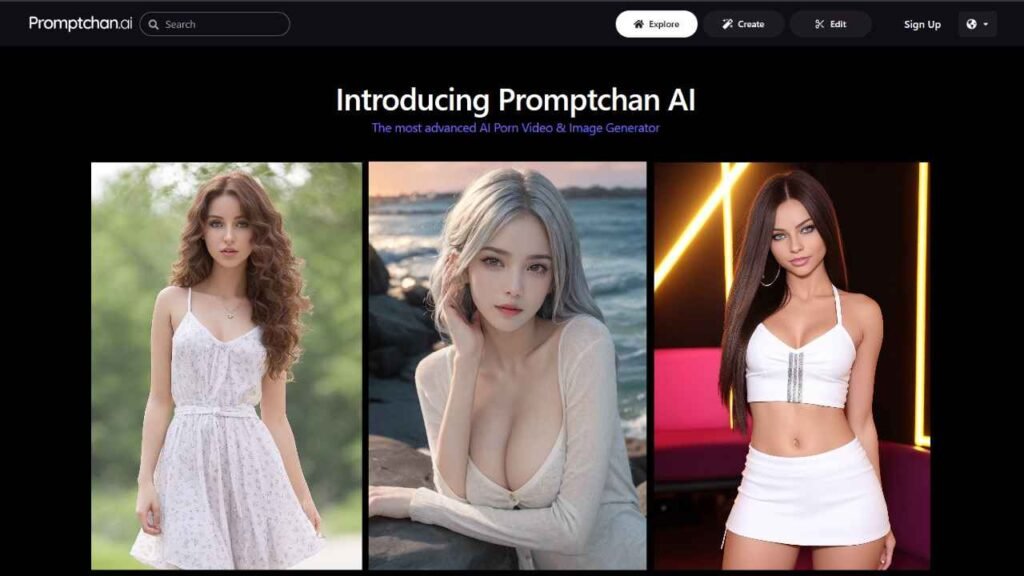
Imagine typing a description into a box and watching a photorealistic image or video of an explicit scene materialize before your eyes. That's the core promise of adult AI image generators like Candy AI, SoulGen AI, or Promptchan AI. These are not simple filters; they are powerful machine learning models trained on enormous datasets to understand and generate new visuals that depict nudity, sexual content, and adult themes. This technology can either create entirely new scenes or manipulate existing photos, a process often lumped under the umbrella term "deepfake" technology when applied to real individuals.
On one hand, this capability can unlock incredible artistic expression and innovation within the adult entertainment industry, allowing creators to explore fantasies and scenarios previously limited by practical constraints. On the other hand, this same power harbors immense potential for misuse, with consequences that ripple far beyond the digital realm, causing profound psychological and social harm.
The Unseen Victims: When AI Porn Turns Malicious
The most chilling aspect of AI porn's proliferation is its capacity for non-consensual exploitation. The technology's ability to create convincing deepfakes has led to a surge in sexually explicit material featuring real individuals who never consented to be depicted in such a manner. This isn't a niche problem; it's a widespread digital invasion that's traumatizing countless lives.
Consider the stark reality: over 34,000 deepfake model variants are readily available online, with more than 15 million downloads since November 2022. A staggering 96% of these deepfake models specifically target identifiable women. Imagine waking up to find sexually explicit images of yourself circulating online, images that are entirely fabricated but look terrifyingly real. This digital invasion of privacy isn't just embarrassing; it leads to immense emotional distress, reputational damage, and profound feelings of humiliation and violation. Victims frequently report anxiety, depression, and even suicidal thoughts.
The Darkest Corner: AI-Generated CSAM
Beyond non-consensual deepfakes of adults, the technology has enabled an even more abhorrent misuse: the creation of AI-generated Child Sexual Abuse Material (CSAM). This is not just a theoretical threat; it's a grim reality. Steven Anderegg, a 42-year-old Wisconsin man, was charged with generating over 13,000 explicit AI images of children using tools like Stable Diffusion.
The numbers are terrifying. Reports of online child abuse to the National Center for Missing & Exploited Children (NCMEC) surged by 12% in 2023, largely fueled by this AI-generated content. This highlights a critical, urgent need for robust safeguards and aggressive enforcement against such horrific applications of the technology.
Unpacking the Risks: More Than Just Deepfakes
While non-consensual exploitation and CSAM are the most egregious misuses, the dangers of unregulated AI porn extend further, impacting individuals and society as a whole.
Peril of Perpetuated Biases
AI models learn from the data they're trained on. If that data contains biases related to gender, race, sexuality, or body types, the AI will inevitably perpetuate and even amplify those biases in its outputs. This can lead to the creation of content that reinforces harmful stereotypes, contributes to misogyny, or inaccurately portrays diverse groups, further entrenching societal prejudices.
Legal Limbo: Copyright and Revenge Porn
The legal landscape is struggling to keep pace. Who owns the copyright to an image generated by AI? What happens when AI is used to create "revenge porn" that exploits a former partner? The lines are blurry, leading to complex legal challenges that current frameworks are ill-equipped to handle, leaving victims in a legal labyrinth.
Societal Shadows
The widespread availability of instantly gratifying, personalized explicit content could distort intimacy and relationships, setting unrealistic expectations or even fostering addiction. As computer scientist Yoshua Bengio has noted, AI holds immense potential, but building a "brave new world of AI erotica" responsibly demands serious consideration of these broader societal impacts. It raises questions about the very nature of consent, agency, and human dignity in a digitally altered reality.
Building an Ethical Framework: Guidelines for Responsible AI Porn
To harness the creative potential of AI porn while mitigating its immense risks, clear ethical guidelines aren't just helpful; they're absolutely crucial. These principles should serve as the bedrock for creators, developers, and platforms.
- Respect Intellectual Property Rights: AI tools should never infringe on existing copyrights or trademarks. Any source material used for training must be properly licensed, ensuring fair compensation and recognition for original artists and creators.
- Protect Individual Privacy Above All: This is non-negotiable. AI must not generate pornographic content featuring real people without their explicit, informed, and verifiable consent. This goes beyond just publicly available images; it means no unauthorized manipulation of any personal likeness.
- Actively Avoid Harmful Stereotypes and Biases: Developers have a moral obligation to scrutinize their AI models and training data for biases. This requires proactive identification and correction to ensure outputs are diverse, inclusive, and do not reinforce harmful societal prejudices.
- Prioritize Consent and Agency in Depiction: Ethical AI-generated adult content should primarily focus on fantastical or fictional scenarios. When depicting individuals—whether real or virtual—they must be portrayed as consenting adults with clear agency. True consent, in this context, must be freely given, specific, informed, and easily retractable at any point.
- Label AI-Generated Content Clearly: Transparency is paramount. All AI-generated adult content should be clearly and unmistakably labeled as such. This helps avoid confusion, deception, and the potential for deepfakes to be mistaken for authentic material.
Putting Principles into Practice: Practical Steps for Responsible Use
Ethical guidelines are only effective if translated into actionable steps. Responsible use of AI porn generators requires a multi-faceted approach involving creators, platform operators, and even consumers.
For Creators: Innovating Ethically
- Collaborate with Consenting Models: The most ethical approach involves combining human artistry with AI capabilities. Work with real, consenting adult models to create source material or to guide AI generation, ensuring that every individual depicted has given their explicit permission.
- Focus on Original Characters and Scenarios: The easiest way to sidestep privacy and consent issues entirely is to invent fictional characters and settings. This allows for limitless creative exploration without infringing on anyone's rights or dignity.
- Develop Specialized, Ethical Datasets: If you're a developer, invest in curating training data that is diverse, inclusive, and free from harmful biases. This helps mitigate the risks of perpetuating stereotypes and creates more ethically sound outputs.
For Platforms: Moderation and Transparency
Platforms hosting or facilitating AI porn generation bear a heavy responsibility.
- Implement Robust Content Moderation: This isn't optional. Platforms need stringent guidelines, combining automated filtering with human review, and clear, accessible user reporting systems. These systems must be designed to swiftly identify and remove non-consensual deepfakes, CSAM, and other exploitative content.
- Mandatory AI-Generated Content Tagging: Every piece of AI-created material should carry a visible, immutable tag or watermark. This helps users distinguish between real and AI-created material, combating deception and misinformation.
- Consider API Access Fees: Some platforms, like Twitter (now X), have found that charging fees for API access can limit bot activity and reduce malicious misuse by making it harder and more expensive for bad actors to operate at scale.
- Advocate for Responsible AI Use: Platforms should actively support and promote developers and creators who prioritize ethical practices. This includes spotlighting content that adheres to consent and privacy guidelines, setting a positive example for the community. If you're looking to responsibly explore the space, you might access the random porn generator that prioritizes user safety and ethical guidelines.
For Consumers: Discernment and Advocacy
As a user, you also play a role in shaping the future of this technology.
- Cultivate Media Literacy: Understand that what you see online might not be real. Question the authenticity of explicit content, especially if it seems too good to be true or involves public figures.
- Report Misuse: If you encounter non-consensual deepfakes or, even worse, AI-generated CSAM, report it immediately to the platform and relevant authorities like NCMEC.
- Support Ethical Creators and Platforms: Choose to engage with and financially support creators and platforms that demonstrate a clear commitment to ethical AI development and responsible use. Your choices have power.
The Lagging Legal Landscape: A Patchwork of Protections
The rapid advancement of AI technology has left legal systems worldwide struggling to catch up. This creates an inconsistent and often inadequate framework for protection against misuse.
In the U.S., for example, only a handful of states like Georgia, Hawaii, Virginia, and Texas have specifically criminalized non-consensual deepfake pornography. Other states, such as California and Illinois, allow victims to sue creators, offering civil recourse but not always criminal prosecution. This patchwork of laws means that victims' protections vary widely depending on their location, creating significant disparities in justice.
Enforcement is another colossal challenge. Studies show that a staggering 73% of people cannot distinguish between real and fake deepfakes. Compounding this, even advanced AI detection programs can only filter out approximately 50% of AI-generated content, leaving a huge gap for malicious material to slip through. Platforms themselves face legal liabilities if they misreport or fail to act swiftly on exploitative content, yet the sheer volume and sophisticated nature of deepfakes make this an incredibly difficult task. A unified approach is desperately needed to offer consistent and robust protections across the board.
Charting the Future: A Call for Collective Responsibility
The global AI image generator market is projected to reach an astounding $917.4 million by 2030, signaling that this technology is here to stay and will only become more pervasive. While the potential for new forms of creative expression is exciting, the ethical stakes are incredibly high.
Building this "brave new world of AI erotica" responsibly demands more than just good intentions. It requires a concerted, unified effort:
- Stronger, Unified Legislation: Federal and state governments must work together to enact comprehensive laws that clearly criminalize non-consensual AI-generated porn and hold platforms accountable for its dissemination. This means moving beyond the current inconsistent legal framework to create equal protections for all potential victims.
- Ethical AI Development as a Priority: Developers must embrace a "people over profits" ethos. This means prioritizing robust safety features, bias detection and mitigation, and explicit consent mechanisms from the very earliest stages of development. It involves continuous research into ethical AI and transparently sharing best practices.
- Education and Awareness: Empowering individuals with the knowledge and tools to identify deepfakes, understand their rights, and know how to report misuse is vital. This includes public education campaigns and integrating digital literacy into curricula.
The promise of AI is vast, offering incredible opportunities for innovation and creativity. However, when it comes to explicit content, that promise must always be tempered by an unwavering commitment to consent, privacy, and human dignity. By fostering a culture of collective responsibility and actively building safeguards, we can strive to ensure that AI serves humanity's best interests, even in the most sensitive of domains.