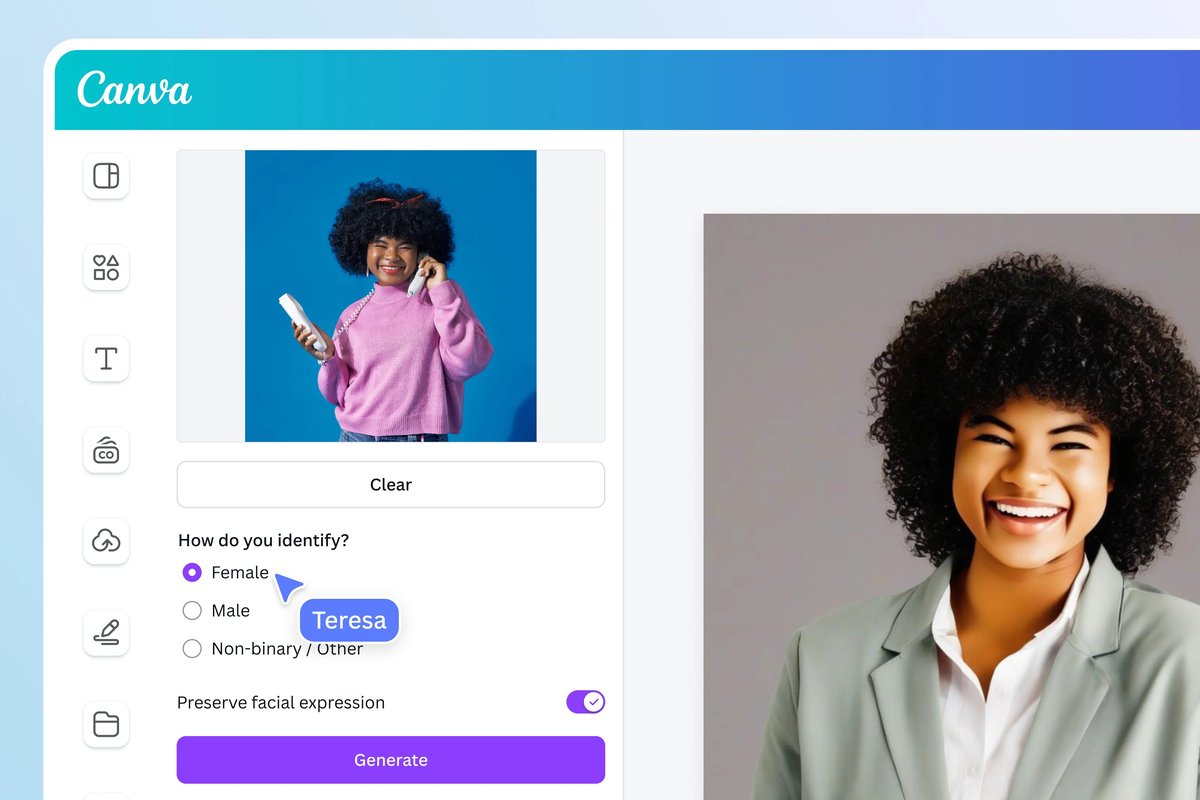
The days of simply typing a basic prompt into an AI generator and hoping for the best are rapidly fading. Today, Customization & Advanced Features in AI Generators aren't just luxuries; they're essential tools that empower creators, developers, and businesses to achieve unprecedented levels of precision, uniqueness, and efficiency. Whether you're crafting a hyper-realistic image, building a sophisticated AI agent, or transforming complex data, the ability to fine-tune every detail is what elevates your output from generic to genuinely groundbreaking.
At a Glance: Harnessing Advanced AI
- Move Beyond Basic Prompts: Modern AI generators offer deep customization, allowing precise control over output, not just simple text-to-image or text-to-code.
- Image Generation Goes Pro: Tools like ChatGPT, Google Gemini, and Adobe Firefly enable localized editing, model selection, high-resolution outputs, and even converting generations into video.
- No-Code Platforms Democratize AI: Platforms like Bubble, Glide, and FlutterFlow allow non-technical users to build sophisticated AI applications with visual interfaces, saving significant time and cost.
- AI Agents for Automation: Advanced features include building custom AI agents that can browse the web, create documents, analyze data, and integrate with real-time business information.
- "Bring Your Own Model" (BYOM): Many platforms allow you to connect your preferred AI models (GPT-4, Claude, Gemini) via API keys for ultimate flexibility.
- Ethical Use Matters: Policies vary on generating real people or explicit content; responsible use is crucial.
- Rapid Evolution: The technology is constantly improving, making AI more affordable, simpler, and indistinguishable from human-created content.
The New Frontier: Why "Generate" Isn't Enough Anymore
Think back to the early days of AI generation. You'd type "a dog in a hat," and you'd get… well, a dog in a hat, sometimes with extra legs or a hat that defied gravity. While impressive at the time, these tools often felt like black boxes. You fed them an input, and they spat out an output, with little control over the nuances.
Fast forward to today, and the landscape is fundamentally different. As AI models become more powerful, so does the demand for specific, tailored results. Creators need to move a specific object, developers need an AI agent to perform a precise sequence of tasks, and businesses need solutions that integrate seamlessly with their existing data. This is where advanced features and deep customization become indispensable. They transform a speculative process into a deliberate act of creation, giving you the reins to guide the AI toward your exact vision. It's about taking the raw power of AI and molding it to serve highly specific, often complex, objectives.
Tailoring Visuals: Precision & Power in AI Image Generators
The world of AI image generation has exploded, evolving beyond mere novelty to become a robust tool for artists, marketers, and designers. The leading platforms aren't just about creating images; they're about refining them, manipulating them, and integrating them into broader creative workflows.
Fine-Tuning Your Vision: Localized Control and Advanced Editing
Imagine generating a stunning landscape, but a single tree isn't quite right. Early AI tools would force you to regenerate the entire image, a frustrating and often futile exercise. Modern generators offer surgical precision:
- Localized Editing: Tools like OpenAI's ChatGPT, especially when integrated with Adobe Express and Photoshop, allow you to select specific areas of an image and adjust brightness, contrast, saturation, or even redraw elements using prompts and sliders. This is a game-changer for iterative design, letting you hone details without losing the overall composition.
- High-Fidelity Output and Resolution: Google Gemini, leveraging its Nano Banana Pro model, excels in delivering best-in-class fidelity and can output high-resolution images (2K or 4K). While a hint of blurriness can sometimes occur at these scales, the sheer detail and quality are remarkable, especially for professional use cases where clarity is paramount. Gemini also stands out for its ability to combine images and generate coherent multi-panel comic stories, demonstrating a sophisticated understanding of narrative and composition.
- Background and Object Removal: Microsoft Copilot, integrated with Windows Paint on Windows 11, provides seamless background and object removal using AI. This feature simplifies complex photo manipulations that once required advanced graphic design skills, making it accessible to a broader audience.
- Intuitive Adjustments for Newbies: Adobe Firefly shines for its user-friendliness, offering a wide variety of choices and intuitive ways to adjust specific aspects of images. Its in-house AI model is particularly recommended for specific requests, providing a guiding hand for those new to the intricacies of AI customization.
Beyond the Static Image: Model Variety and Dynamic Content
The true power of advanced AI image generators isn't just in making a single perfect image, but in offering flexibility and expanding what's possible:
- A Buffet of Models: Shutterstock AI Image Generator offers an impressive variety of AI models—including its proprietary one, Amazon, ChatGPT, and Gemini. This model-agnostic approach allows users to experiment or even let the platform automatically select the best model for a given prompt, yielding four distinct images with each generation. It also grants access to classic models like OpenAI's DALL-E 3 and Gemini's older Imagen 3 and Imagen 4, catering to specific aesthetic preferences.
- Uncensored Creativity and Video Integration: Grok (X) distinguishes itself with an "uncensored approach," allowing the generation of explicit content, including nudity and real people, which is a stark contrast to most other platforms. For those pushing boundaries, Grok also uniquely converts image generations into videos, opening up new avenues for dynamic content creation directly from static inputs. For those seeking broader content generation tools, you might want to explore alternatives like our random porn generator.
- The Art of Prompt Engineering: While not a "feature" in the traditional sense, the ability to refine and iterate on prompts is a critical advanced skill. Optimal AI image output almost always requires multiple generations and prompt refinement, often necessitating paid services to access the most capable models and bypass usage limits.
A Note on Ethics: Generating AI images of real people or NSFW content raises significant ethical questions. While some services like Grok allow it, others like Copilot explicitly refuse. Always consider the implications and policies of the platform you're using.
Building Smarter, Faster: The No-Code AI Revolution
Beyond generating static images, the most profound advancements in AI customization are happening in the no-code space. These platforms are democratizing AI development, making it accessible, cheaper, and faster for non-technical users to build sophisticated AI applications. By 2026, it's projected that 75% of new applications will utilize no-code tools, potentially cutting development costs by up to 90%.
Key Features Driving No-Code AI Customization
No-code platforms equip users with visual interfaces, drag-and-drop tools, pre-designed templates, and seamless integrations, enabling rapid deployment of AI solutions without a single line of code.
- AI-Powered UI and App Generation:
- Bubble simplifies app creation by generating app structures and UI layouts directly from text prompts, allowing conversational editing. It then pairs this with a visual workflow editor for manual adjustments.
- Softr's AI App Generator converts text prompts into functional apps, complete with UI, business logic, user roles, and a sample database, deploying responsive Progressive Web Apps (PWAs).
- Appy Pie uses GPT-4o to generate screens, navigation, and core app structures from plain English descriptions, which users can then refine in a visual editor.
- FlutterFlow boasts "Prompt to Page" and "Prompt to Component" features, allowing users to rapidly generate entire pages or UI elements directly from text descriptions.
- Intelligent Data Transformation and Processing:
- Glide offers 10 AI-powered tools for data transformation, including Audio to Text, Document to Text, Image to Text, and various structured data conversions. Its managed AI system intelligently selects and upgrades LLMs in the background.
- Adalo integrates "Ask ChatGPT Custom Action" (GPT-3.5 turbo) for text processing, translation, sentiment analysis, and content moderation directly within its mobile app builder.
- Softr employs AI Agents for tasks like summarization, categorization, PDF analysis, and sentiment analysis, and includes an "Ask AI" feature for natural language interaction with live data.
- "Bring Your Own Model" (BYOM) & API Integrations:
- Momen truly champions the BYOM approach, allowing users to connect their API keys for OpenAI, Gemini, Claude, or DeepSeek, or utilize Momen's built-in GPT-4o. This provides ultimate flexibility and control over which models power your application.
- Adalo allows connection to any REST API (e.g., Anthropic) via Custom Actions, providing a gateway to a vast ecosystem of external AI services.
- FlutterFlow integrates seamlessly with Google AI (Vertex AI, Firebase) and can connect to any AI service with a RESTful API (like Groq, Stability AI, Dall-E), offering robust integration capabilities.
- Softr's Business/Enterprise plans support custom API keys for OpenAI and Anthropic, allowing users to scale their AI usage and customize their model choices.
- Advanced AI Agent Building:
- Appy Pie includes an AI Agent Builder for crafting advanced agents capable of web browsing, email communication, document creation, and data storage.
- Momen features a visual AI Agent Builder where users can assign task roles, incorporate real-time business data from various sources (databases, APIs, local files), and chain AI actions (Actionflows) for complex automation.
- FlutterFlow's AI Agent Builder leverages OpenAI, Google, and Anthropic models, allowing users to define roles with system messages, fine-tune with few-shot prompting, and adjust parameters like Temperature and Max Tokens for desired output.
- Softr uses AI Agents for various intelligent tasks and allows custom API keys on higher tiers.
- Workflow Automation & Visual Logic:
- Bubble's visual workflow editor enables non-technical users to define complex logic, integrating AI generation with manual editing.
- Momen's Actionflows provide a visual way to define AI agent behaviors and external API calls, streamlining complex data processing and updates.
- FlutterFlow's Visual Action Flow Editor helps trigger AI responses and maintain conversation context within your applications.
- Scalability and Deployment:
- Adalo builds native iOS/Android apps from a single visual design and scales to over 1,000,000 monthly active users.
- Momen supports scalability for up to 1 million daily active users, with one-click publishing for both frontend and backend.
- FlutterFlow offers one-click deployment to App Store, Play Store, or web, and uniquely allows users to export the full Flutter/Dart code for complete control and extensibility.
Choosing Your No-Code AI Powerhouse
Selecting the right platform hinges on your specific needs:
- Ease of Use: How intuitive is the drag-and-drop interface for your team?
- Built-in AI Capabilities/Integrations: Does it natively support the LLMs you need (GPT-4, Claude, Gemini), or does it require complex API integrations?
- Scalability: Can it handle your projected user load and data volume? (e.g., Glide with 10 million rows, Adalo with 1M+ MAU, Momen with 1M+ daily users).
- Deployment Options: Do you need web apps, native iOS/Android, or PWAs?
- Pricing: Free tiers for testing are common, but paid plans vary greatly based on features, users, and AI usage ("credits" or API calls billed separately).
- Security & Compliance: Look for SOC 2, GDPR, CCPA, HIPAA compliance, especially for sensitive data. Glide, Bubble, and Appy Pie highlight strong security.
No-code AI platforms are not just for basic prototypes; they are building robust, enterprise-grade solutions. For instance, NuShift developed an AI document analysis app (ELMR-T) in just 4 weeks using Bubble, a task that would traditionally take 4-6 months with coding. Similarly, CarboNet reduced software development costs by 30x using Glide.
Unlocking New Possibilities: What Customization Means for You
The deep customization and advanced features in AI generators aren't just technical specifications; they are pathways to entirely new ways of working and creating.
- For Creators & Designers: Imagine generating unique assets that perfectly match your brand's aesthetic, then subtly tweaking colors, textures, or compositions with localized AI edits. This streamlines workflows, reduces iteration time, and allows for highly personalized visual storytelling that stands out.
- For Businesses & Entrepreneurs: The ability to build custom AI agents means automating internal processes, enhancing customer service with intelligent chatbots, or analyzing market data in unprecedented ways—all without hiring a team of AI developers. This translates to significant cost savings and a potent competitive edge.
- For No-Code Developers: These tools allow rapid prototyping and deployment of complex applications. Need an AI-powered lead generation tool? Or an internal app that summarizes daily reports? With "Prompt to Page" and integrated AI agents, you can build solutions in days or weeks, not months. The ability to connect your own AI models via API keys ensures your applications stay at the cutting edge.
Overcoming the Hurdles: Pitfalls and Best Practices
While powerful, these advanced features come with their own set of considerations.
- Over-reliance on Defaults: Don't just accept the first output. Dive into the customization options. Experiment with different models on Shutterstock AI or adjust parameters on FlutterFlow's AI Agent Builder. The magic lies in the details.
- Ignoring Ethical Guidelines: Especially concerning image generation, be acutely aware of platform policies regarding real people, explicit content, and copyright. Always prioritize responsible and ethical AI use.
- Underestimating Prompt Refinement: Even with advanced features, the quality of your prompt is paramount. Learning to craft precise, detailed, and iterative prompts (prompt engineering) is a skill that will unlock the full potential of these tools.
- Data Privacy and Security in No-Code: When building AI apps with sensitive data, scrutinize the platform's security certifications (SOC 2, GDPR, CCPA). Ensure user data isn't inadvertently used for AI training, as Glide specifically guarantees.
- Cost Management: Many advanced features, especially on paid no-code plans or premium AI image generators, operate on a usage-based model (e.g., "AI credits," API usage). Monitor these costs to avoid surprises.
The Future Is Personalized: Staying Ahead in AI
The pace of innovation in AI is relentless. What's considered an advanced feature today might be a standard offering tomorrow. The trend is clear: AI is becoming more affordable, simpler to use, and capable of generating outputs that are increasingly difficult to distinguish from human-created content.
Staying ahead means embracing customization. It means actively exploring the nuances of each platform, understanding the capabilities of different AI models, and continuously refining your approach. Whether you're localizing edits in an AI-generated image or building a multi-agent AI workflow in a no-code environment, the power to personalize and control your AI is what will truly define success in this evolving landscape.
Your Next Step to AI Mastery
Ready to move beyond basic generation? Start by identifying a specific problem or creative goal where precision and customization would make a difference. Explore the free tiers and trials offered by these platforms. Dive into the advanced settings, experiment with prompt engineering, and don't be afraid to connect external APIs or build your first AI agent. The journey into advanced AI customization is an iterative one, and every tweak, every new integration, brings you closer to mastering these incredible tools.